
In simple terms, it refers to a deduction allowed in income tax, irrespective of expenses incurred or investment made by assessees.

'Make-in-India played a key role in India's effective action against terrorism during Operation Sindoor.'

'Additionally, the significant employment multiplier will boost direct and indirect jobs of up to 1.1 million.'

'There is a need for an innovation sandbox where the PSBs can collaborate and then they can do their own innovation on top of it.'

In a move to deepen manufacturing in electronics in India, the Centre is targeting 35-40 per cent value-addition through the yet-to-be launched production-linked incentive (PLI) scheme for electronics components, sources in the government

WazirX lost about 45 per cent of its crypto assets to the security breach. People privy to the discussions say North Korea has been mentioned.

The revamped Special Economic Zone (SEZ) law is unlikely to see the light of the day before the upcoming Lok Sabha elections, two people aware of the matter said. The commerce department had sought the Union Cabinet's nod to bring amendments to the existing SEZ Act, 2005 late last year. The plan, thereafter, was to introduce the Bill in the winter session of Parliament. Cabinet's approval remains pending.
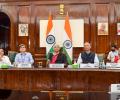
Seven of the meetings will be held in late November or early December at the finance ministry, as is the norm.

Leaving behind apprehensions of a rise in interest rates and petro duty cut impacting budget numbers, the officials are now confident of keeping the fiscal deficit within the targeted 4.6 per cent of the gross domestic product.

The ministry of urban development has asked the finance ministry to lower the duty in order to promote the public transportation system in the country.


Arun Jaitley had proposed in the Budget to double the rate of capital gains tax on debt MFs to 20%.

Even as some government departments have raised concerns on the Bill in its present form, the finance ministry has decided not to delay any further and may table it in Parliament next week.
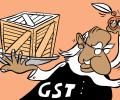
In October 2024, Jindal Stainless challenged a Goods and Services Tax (GST) notice in the Delhi high court. It was about corporate guarantees issued to related parties by its former group company, Jindal Stainless (Hisar), before their merger in March 2023.

Go First chief executive officer Kaushik Khona and tribunal-appointed interim resolution professional Abhilash Lal on Thursday reached out to the airline's staff, seeking their support for revival. While Khona said the company had taken all steps for the airline's revival, Lal put forward the view it would have to raise funds. Employee engagement took place a day after the National Company Law Tribunal (NCLT) admitted the airline's insolvency plea on Wednesday and ordered a moratorium on recoveries.

Real estate developers are hoping that the slew of tax concessions announced in Union Budget 2025, set to take effect this financial year, will spur demand for affordable and mid-segment housing, even as the broader housing market shows signs of fatigue.

Amid fast-depleting forex reserves, the Finance Ministry on Wednesday signalled that it was not in favour of selling the dollar to defend any particular level of the rupee. "Let it (rupee) reach whatever levels it has to reach. We can't fritter away reserves on defending some artificial, imaginary rate of exchange," a senior finance ministry official told Business Standard. Forex reserves declined to a near two-year low of $545.65 billion as on September 16, down $85.88 billion from the level that existed on February 25, a day after Russia invaded Ukraine.

The Centre is in "mission mode" to fill vacancies in government departments and ministries. The Department of Expenditure is currently following up with other wings of the government to expedite pending appointments. Regular follow-ups are being made to fill the vacant positions, so that the stated target of eliminating 1 million vacancies is met by December 2023, ahead of the next Lok Sabha elections. Even as the nodal ministry for filling vacant positions in the government is the Department of Personnel and Training (DoPT), the Department of Expenditure's Establishment Coordination (Personnel) division is providing support for the recruitment drive.

The Ministry of Heavy Industries (MHI) has debarred Hero Electric and Benling India, two defaulters under its flagship Faster Adoption and Manufacturing of Electric Vehicles in India Phase-II (FAME-II) scheme, from participating in any of its incentive programmes in future. This action follows the ministry's findings that the phased manufacturing programme (PMP) guidelines were violated by these two companies, senior officials told

The Budget announcement of zero tax for earnings upto Rs 12 lakh per annum and the rejig of tax slabs across the board should prompt more than 90 per cent of individual taxpayers to embrace the new tax regime as compared to the about 75 per cent as of now, CBDT Chairman Ravi Agrawal said. Agrawal also highlighted the government's focus on "non-intrusive" tax administration through enhanced use of Artificial Intelligence (AI) and simplified tax processes for common taxpayers. He emphasized the benefits of the new tax regime (NTR), which offers simple calculations and allows taxpayers to file their ITR without professional help. The CBDT chief stated that the Budget provisions related to income tax payment benefit all income earners, not just those earning Rs 12 lakh per annum, creating a positive sentiment in the economy and propelling growth. The department is also harnessing technology, including AI and data analytics, to widen and deepen the tax base, resulting in increased compliance and tax revenue. Agrawal further highlighted the positive impact of data availability and simplified tax processes on compliance rates, citing examples of taxpayers filing revised returns and paying taxes after being prompted by the department's data analysis.

'I think today RBI supervision is much sharper than what it was earlier.'

The central government has given banks and credit card entities six to eight months to put in place the requisite reporting mechanism and related features to collect tax at source on international credit card transactions, a senior bureaucrat told Business Standard. According to the bureaucrat, the plan to bring overseas credit cards under the Liberalised Remittance Scheme (LRS) has not been mothballed and is simply being deferred so that banks get adequate time to get the system up and running. The official expects the reporting mechanism to be ready in the given time, and the rule could be implemented in the next financial year (2024-25, or FY25).

AG is of the view that there is no point in dragging the matter further when it has already been "struck down" by one international forum, and also by the top Indian court.

The Life Insurance Corporation of India has the wherewithal to acquire a composite license, a top source aware of the development told Business Standard, adding that the insurance behemoth may look into entering the health and general insurance segments. "LIC has the scale, capacity, IT infrastructure, and the distribution reach to take advantage of the composite license. "LIC is looking at organic as well as inorganic growth opportunities.
The GST Constitutional Amendment Bill is with the standing committee.

A source in the know said realistically two-three of the seven bullet train corridors could be included as a practical election promise.

'It has been an ongoing process, talking to the relevant ministries about eliminating leakages and curbing non-core expenditure in various schemes.'
